
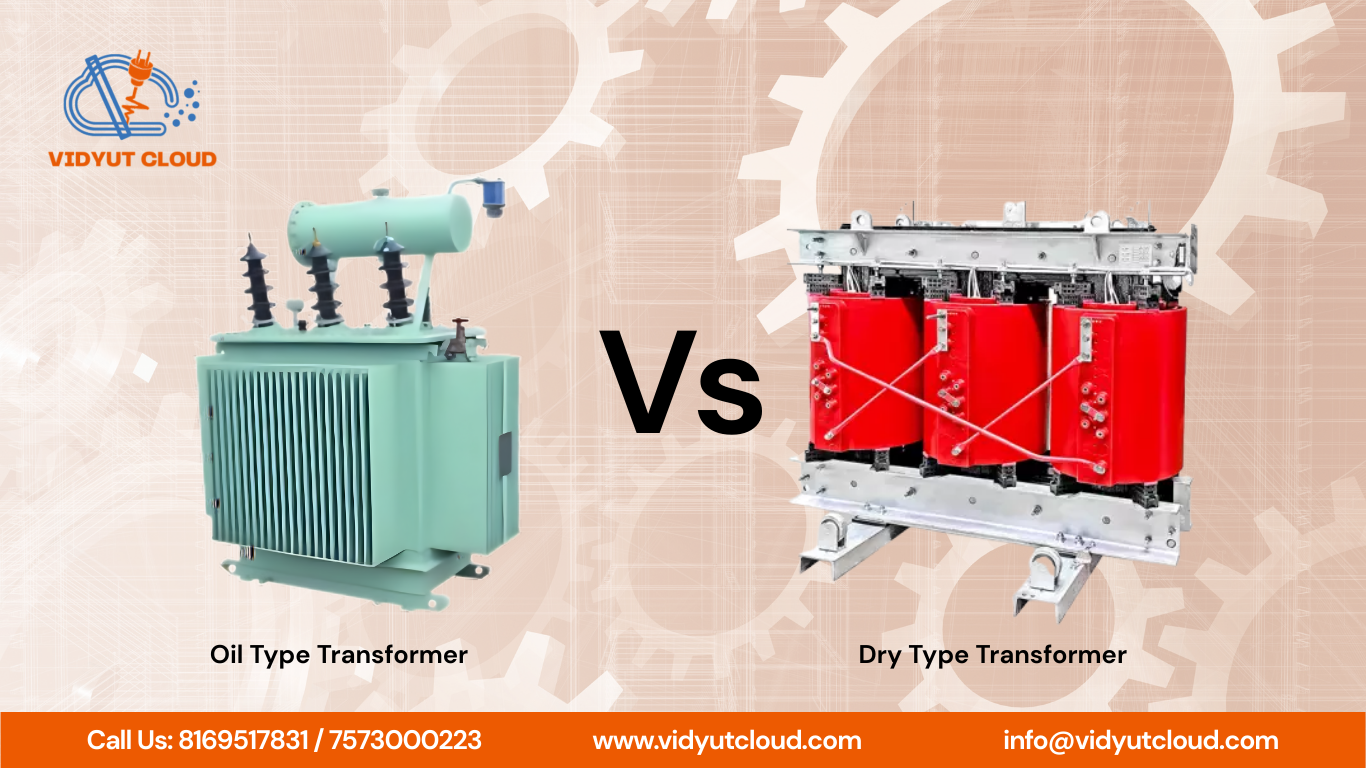
Transformers are the lifeline of modern electrical systems—powering everything from industries and data centers to hospitals and renewable energy plants.
But when it comes to choosing the right type of transformer, one question often arises:
👉 Should you choose an oil-filled transformer or a dry-type transformer?
Both designs serve the same purpose—stepping voltage up or down—but they differ significantly in cooling method, installation environment, safety, and maintenance.
In this guide, we’ll break down everything you need to know to make the best choice for your project.
What Is a Dry-Type Transformer?
A dry-type transformer uses air or epoxy resin instead of oil for insulation and cooling.
It relies on natural air (AN) or forced air (AF) for heat dissipation, making it ideal for clean and safe indoor environments.
✅ Key Advantages
- Enhanced Safety: No risk of oil leaks or fire, making it perfect for enclosed or public spaces.
- Low Maintenance: No oil sampling or filtration required.
- Eco-Friendly: Non-toxic and environmentally safe.
- Compact Installation: Can be installed closer to load centers, reducing cable costs.
⚠️ Limitations
- Higher Initial Cost than oil-filled transformers.
- Lower Capacity: Usually limited to 30 MVA or below.
- Reduced Cooling Efficiency under continuous heavy load.
- Shorter Lifespan in humid or dusty environments without proper enclosure.
What Is an Oil-Filled Transformer?
An oil-filled transformer uses mineral oil or synthetic insulating fluid for both cooling and insulation.
The oil circulates within a sealed tank, efficiently dissipating heat from the core and windings.
✅ Key Advantages
- Superior Cooling Efficiency: Ideal for high-capacity and heavy-duty applications.
- Longer Lifespan: Typically lasts 20–30 years with proper maintenance.
- Cost-Effective: Lower initial cost per kVA compared to dry-type.
- Proven Reliability: Widely used in utilities and industrial environments.
⚠️ Limitations
- Fire Hazard: Flammable oil requires strict safety systems.
- Environmental Risk: Oil leaks can contaminate soil or groundwater.
- Maintenance-Intensive: Requires regular oil testing, filtration, and tank inspections.
- Limited Indoor Use: Needs fire-rated rooms or barriers for indoor installations.
Oil-Filled vs. Dry-Type Transformers – Quick Comparison
| Feature | Oil-Filled Transformer | Dry-Type Transformer |
| Cooling Medium | Mineral/Synthetic Oil | Air or Epoxy Resin |
| Installation | Outdoor or isolated indoor | Indoor or protected outdoor |
| Maintenance | High (oil testing, leaks) | Low (no oil) |
| Fire Safety | Flammable | Non-flammable |
| Efficiency | Higher | Slightly lower |
| Capacity | Up to 1000+ MVA | Up to ~30 MVA |
| Initial Cost | Lower | Higher |
| Environmental Impact | Possible oil contamination | Eco-friendly |
| Lifespan | 20–30 years | 15–25 years |
Which Transformer Should You Choose?
The right transformer depends on your environment, capacity, and safety priorities.
Choose an Oil-Filled Transformer if:
- You need high-capacity power (above 5 MVA).
- Outdoor installation is feasible.
- Budget optimization is a priority.
- You have a dedicated maintenance setup for oil testing and fire safety.
Choose a Dry-Type Transformer if:
- You need a safe indoor solution (ideal for hospitals, commercial complexes, and data centers).
- Fire safety and environmental protection are critical.
- You prefer low-maintenance and clean operation.
- Load demand is within 30 MVA.
Both oil-filled and dry-type transformers have distinct advantages—what matters most is aligning the transformer type with your operational, safety, and environmental goals.
While oil-filled transformers dominate in industrial and utility-scale applications, dry-type units shine in indoor and safety-critical environments.
At Vidyut Cloud, we help organisations make smart transformer choices—balancing performance, efficiency, and long-term cost savings.
Frequently Asked Questions (FAQ)
1. What’s the main difference between oil-filled and dry-type transformers?
Oil-filled units use oil for insulation and cooling; dry-type units use air or resin.
2. Which transformer is safer indoors?
Dry-type transformers—they’re non-flammable and leak-free.
3. Which one is more energy-efficient?
Oil-filled transformers typically offer higher efficiency under heavy load conditions.
4. Which has lower maintenance costs?
Dry-type transformers, since no oil monitoring or filtration is required.
5. Can dry-type transformers handle high capacity?
Generally, yes—up to about 30 MVA. Beyond that, oil-filled models are preferred.
6. Which type lasts longer?
Oil-filled transformers can last 25–30 years with proper care.
7. Are oil-filled transformers environmentally risky?
They can be if oil leaks occur; dry-type transformers are more eco-friendly.
8. Which has a higher initial cost?
Dry-type transformers cost more initially but save on fire protection and maintenance.
9. Which industries prefer dry-type transformers?
Hospitals, data centers, malls, and high-rise buildings.
10. Which industries prefer oil-filled transformers?
Utilities, heavy manufacturing, and power generation.
11. Can dry-type transformers be used outdoors?
Yes, if placed in weatherproof enclosures.
12. Which transformer type suits renewable energy better?
Oil-filled transformers—especially for solar and wind farms due to their high capacity.
13. Do both follow the same efficiency standards?
Yes. Both comply with IS/IEC efficiency and loss standards.
Choosing the right transformer isn’t just about cost—it’s about performance, safety, and sustainability. Contact Vidyut Cloud today to get expert recommendations tailored to your project.